Farnoosh Koleini
AI // Computer Vision // Healthcare
Hey there, welcome to my homepage!! I am a PhD student in Computer Science at UNC Charlotte, working under the supervision of Dr. Pu Wang. I am exploring how AI techniques can revolutionize robotics and computer vision by enabling the monitoring of human movement disorders without the need for motion capture laboratories (MoCap).
I received my double Masters’s degrees in computer science and chemistry from East Carolina University University. During my time at ECU, I had the pleasure of working with Dr. Paul Gemperline and Dr. Nasseh Tabrizi on research focusing on AI, machine learning techniques, and tensor decomposition methods to identify genes significantly associated with colon cancer susceptibility. In my free time, I enjoy hiking, tennis, photography, and spending time with my family and friends.
Research Interests
News
| Apr 27, 2026 | Excited to be returning to Canon USA for another summer research internship in 2026! |
|---|---|
| Apr 23, 2026 | Our invention on biomechanically-accurate 3D pose estimation has been nominated for the 2026 Invention of the Year Awards at UNC Charlotte! |
| Apr 10, 2026 |
Honored to be featured by the UNC Charlotte College of Computing and Informatics for Graduate Student Appreciation Week!  See the LinkedIn post. See the LinkedIn post.
|
| Nov 24, 2025 |
New preprint released: MonoMSK: Monocular 3D Musculoskeletal Dynamics Estimation is now on arXiv. 
|
| May 12, 2025 | Joined Canon USA in Irvine, California as a summer research intern, working on computer vision research. |
Selected Publications
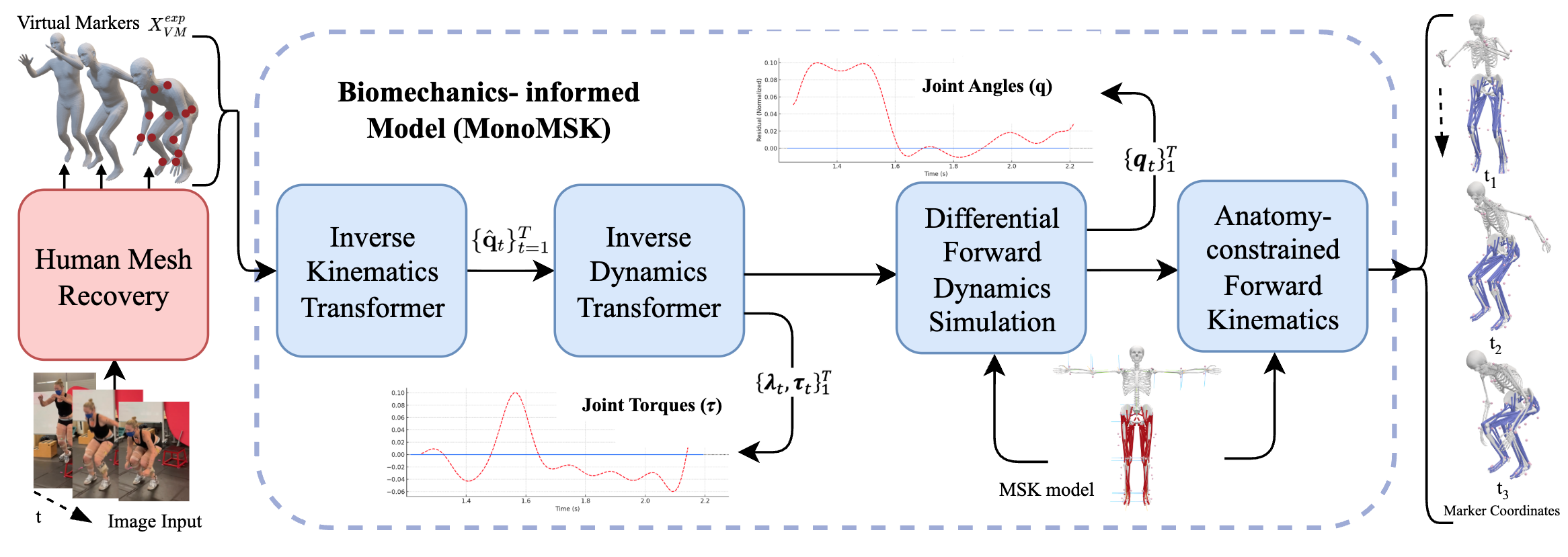
Koleini, F., Xue, H., Helmy, A., & Wang, P. (2025). MonoMSK: Monocular 3D Musculoskeletal Dynamics Estimation. arXiv preprint arXiv:2511.19326.
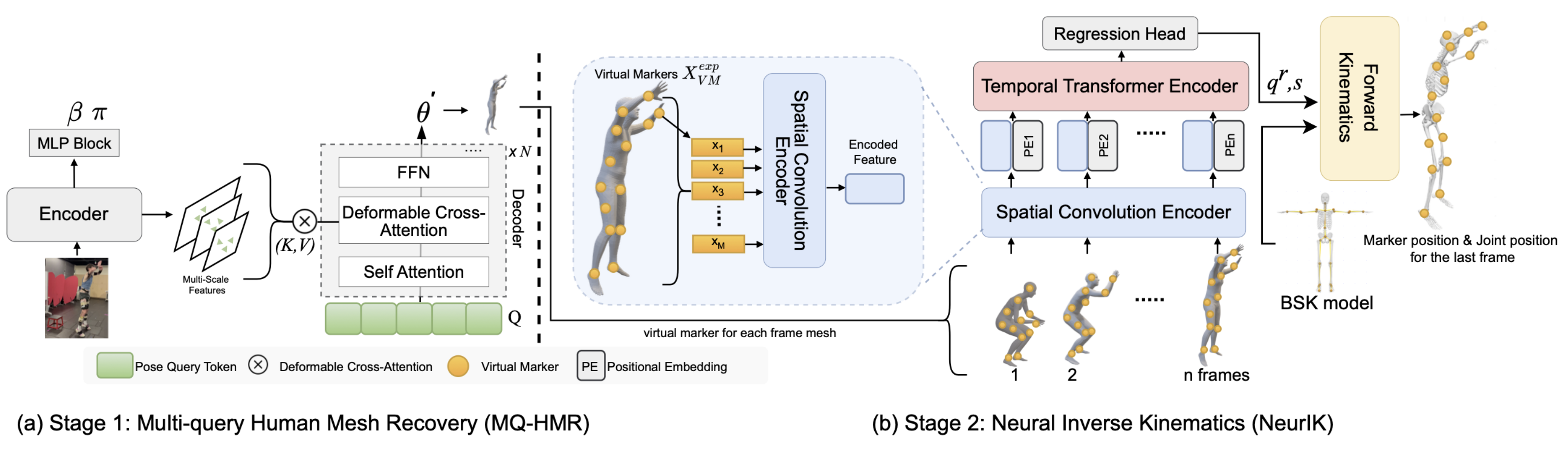
Koleini, F., Saleem, M. U., Wang, P., Xue, H., Helmy, A., & Fenwick, A. (2025, February). BioPose: Biomechanically-accurate 3D Pose Estimation from Monocular Videos. In 2025 IEEE/CVF Winter Conference on Applications of Computer Vision (WACV) (pp. 6330–6339). IEEE.